November and December 2004
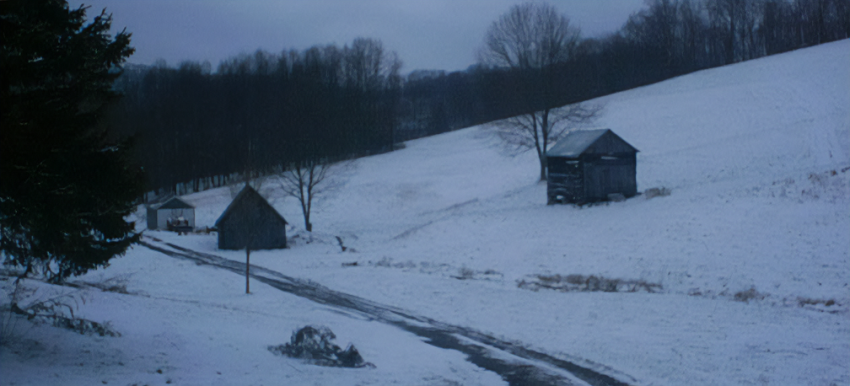
November is one of my favorite months on the farm. The leaves are off the trees, and the wind takes on a different tone when it moves through the woods — low and restless, like it’s speaking to itself. The air hangs damp and heavy, and a calmness settles over everything. Sometimes I would stand in the driveway, watching my breath rise and disappear. Most of the time, though, I wandered into the woods, where the ground was soft with fallen leaves and the trees stood bare as bones.
I liked to stand outside when it was dark. That’s when the wind roared the loudest. All of nature seemed to be fighting for sleep, but the wind would not let it rest. I felt a part of it, as if the stillness of the night and the wildness of the wind met somewhere inside me. I could stand there for hours with my eyes closed, feeling the cold air press against my face. When it snowed, it was even better. The flakes fell so quietly that it seemed the world itself was holding its breath. The snow absorbed every sound from the forest, leaving behind a deep, beautiful silence.
This was the time of year that made me think of Robert Frost’s Stopping by Woods on a Snowy Evening. A man on his way to visit a friend pauses to take in the beauty of the snowfall. He, too, wishes he could stay forever, surrounded by quiet and peace. But then comes the last stanza — the one that always lingers in my mind:
“The woods are lovely, dark and deep,
But I have promises to keep,
And miles to go before I sleep,
And miles to go before I sleep.”
College Winding Down
November was also when college began to slow. Professors hurried to cram in all they could before Thanksgiving, and students and teachers alike grew anxious to be done. I loved the WVU campus — the sight of students bundled in scarves, the smell of coffee drifting from the Mountainlair, and the soft hum of the PRT as it carried people from one hill to another. I’d often stop to listen to the street preacher who stood by the library steps, playing church hymns on his trumpet. Sometimes I’d linger just to hear him play “Amazing Grace,” the notes floating like smoke over the cold air.
From the Coliseum parking lot, I’d watch the marching band practice, the brass glinting under the gray sky. It made me proud to be there, to belong to something so alive. But that chapter was coming to an end. The accident back in June had left me with medical bills, and I’d decided it was time to take responsibility. They were my bills to pay. My parents had offered to help, but it was my burden to shoulder.
So, after finals, I planned to take the spring semester off to work at Cracker Barrel. I’d pay off the bills and then transfer to Fairmont State University, which was only fifteen minutes from the farm — closer than the forty-minute drive to Morgantown. It wasn’t the ending I had imagined, but it was the right one.
Sonny’s Arrival

Even with all the bustle, we still felt the loss of Sammy. His doghouse was still visible from the back porch, empty and weathered. Every time we looked out, our hearts sank a little. Sammy had been such a happy dog. He loved people — and rolling in whatever he could find. Usually animal poop. No matter how many baths we gave him, he always found a way to smell terrible again. That’s why he was often on the run, darting through the fields before anyone could stop him.
One evening, we stopped by Jimmy’s — a small restaurant we liked that served all-you-can-eat pasta on Tuesdays. Jimmy, the owner, came over to chat, and out of the blue he asked if my parents were looking for a dog. My mom perked up. “What kind?” she asked. Jimmy told us about a white Labrador named Sonny. He was on his third family, only two years old, and full of mischief. “Bad luck,” Jimmy said with a shrug. In truth, Sonny wasn’t bad — just high energy, clumsy, and impulsive.
We hadn’t planned on replacing Sammy, but when the chance came, we couldn’t resist. Sonny was a happy dog, too — the kind of dog that could melt your anger in an instant. He’d get into trouble before you could even tell him no, knocking over buckets or stealing gloves, then look at you with those sad brown eyes as if to say, But I love you! It was funny in movies, but a little less so when it was your stuff he destroyed. Still, he brought laughter back into the house, and that was something.
Farm Projects and Thanksgiving

Before the first snow, Dad and I worked to insulate the main level of the house. The HVAC system worked fine, but without insulation the heat slipped right through the walls. We stapled plastic to the wooden beams and blew insulation into the cavities until the air inside finally held some warmth. The smell of fresh wood and insulation filled the rooms. It felt good to be working with a purpose again — a shared one.
This was the first big project since finishing the upstairs that we managed to complete on time and under budget. When we stood back to look at what we’d done, we both felt that quiet satisfaction that comes only from hard work done right.
The next job was redoing the floors in the kitchen and the master bedroom upstairs. The old floorboards had grown soft in places, creaking beneath our steps. We tore them up, cut out the floor joists, and replaced them before covering everything with new plywood. John and Barb came over to help, and with their extra hands the work moved quickly. By the time we finished, the house felt sturdier — less like a project and more like a home.
We spent Thanksgiving with John and Barb as well. Their kids were home, and the house was full of laughter and good food. We took care of the alpacas during the day and shared a fantastic dinner in the evening. Later we sat in the living room, watching football and telling stories — about alpacas, life, and our ongoing adventures with the neighbor at the end of the road.
Family Visits

A few days after Thanksgiving, my Aunt Theresa and cousin Matthew came to visit. Matthew was four and loved exploring. He followed the alpacas around, giggling as they sniffed at his mittens. Aunt Theresa was my mom’s sister, and it was always a comfort to have her visit.
Soon it was time for our yearly tradition — driving to Wytheville, Virginia, to meet my grandparents at the Cracker Barrel. We’d bring them back to the farm for the holidays, then repeat the trip when it was time for them to return home. The drive to Wytheville reminded me of the journeys I’d made before moving to the farm — long drives south toward Spartanburg. A part of me wanted to keep going, to see those familiar roads again, but it was nice to take in the familiar hills and note what construction had been finished since my last trip.
We usually spent Christmas with extended family, but that year it was just us. It felt different — quieter, simpler. But in that quiet was a sense of peace. After all the tension and arguments earlier that year, this Christmas felt like a gift, a sign that we had grown closer as a family. A reward for finding harmony again.
Christmas
We stayed home for Christmas, the farm blanketed in snow and the air sharp with cold. Inside, we decorated a tree that stood proudly in the center of our half-finished house. Its lights glowed softly against bare studs and plywood, a small symbol of hope amid the unfinished work. Somehow, the contrast made it all the more beautiful — a reminder that joy doesn’t wait for perfection.
Our tradition was to open one gift at midnight. My mom’s favorite movie had always been The Wizard of Oz, so I found her a commemorative edition DVD box set complete with posters and keepsakes. Watching her open it was the highlight of my Christmas. Around us, the house still smelled faintly of sawdust and fresh plywood — the scent of progress and persistence.
By then, the insulation and new floors had made the house warm and sturdy. My dad and I agreed to take a break from renovations for the holidays — a well-earned rest. I felt proud of what we had accomplished together.
After Christmas, I planned a trip to South Carolina to visit friends and my Uncle Rusty in Atlanta. It felt right to go, knowing my parents were settled, safe, and content — with their collie and that ridiculous white Labrador standing guard.
The night before I left, I stepped outside. The sky was clear, the stars bright, and the woods stood silent under a thin crust of snow. I thought again of Frost’s traveler, pausing in the quiet of the woods — tempted to rest but reminded of promises yet to keep. I realized I had my own.
When I returned, it would be 2005 — a new year and a new chapter. The farm would be waiting, quiet and patient beneath its blanket of snow, and I still had miles to go before I’d sleep.
End of Part 2